Skip to content

Paint Correction Services in Omaha, NE

Swirl marks, light scratches, and a cloudy finish can make your vehicle’s paint look dull and worn. Tint & Gloss uses machine polishing to refine the clear coat, reduce visible imperfections, and restore a cleaner, glossier appearance. Contact us for a paint correction quote based on your vehicle’s condition.

  • 10 Years in the Industry
  • Quoted Per Vehicle
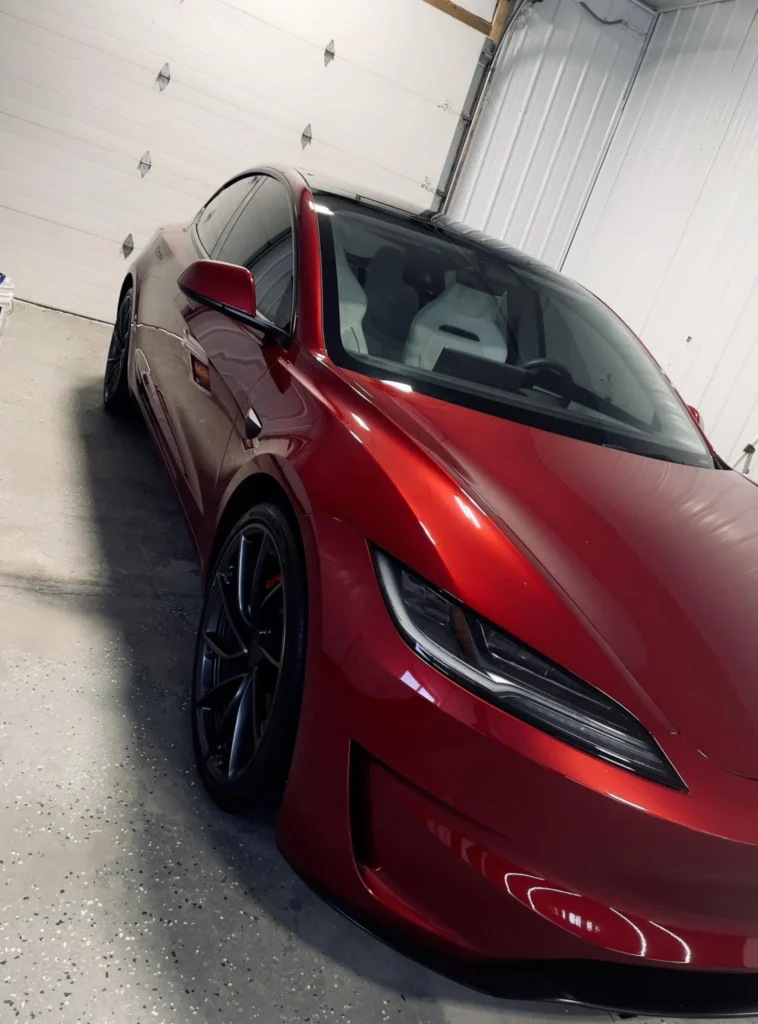
Red Tesla Model 3 inside the Tint & Gloss shop in Omaha

Paint Correction in Omaha: Matching the Work to Your Paint

The right level of paint correction depends on your vehicle’s condition, how you use it, and the finish you want to achieve. Some cars need light polishing to reduce swirl marks, while others require more extensive correction to improve visible scratches and dull areas.

Omaha receives approximately 2,724 hours of sunshine annually, making paint imperfections easier to notice in direct sunlight. Swirl marks, water spots, and cloudy areas that are less visible in the shade can stand out under bright outdoor light, affecting your vehicle’s overall appearance.

To get started, tell Tint & Gloss your vehicle’s year, make, and model, which areas concern you, and what results you hope to achieve. We can use those details to better understand your needs and discuss a suitable paint correction service.

Choose Your Correction Level, From Light Polish to Heavy Defect Work

Paint correction removes defects by abrasive polishing: a thin layer of clear coat is leveled so swirls, haze and light scratches stop scattering light. The levels below describe general industry practice, and the quote confirms which one fits your paint.

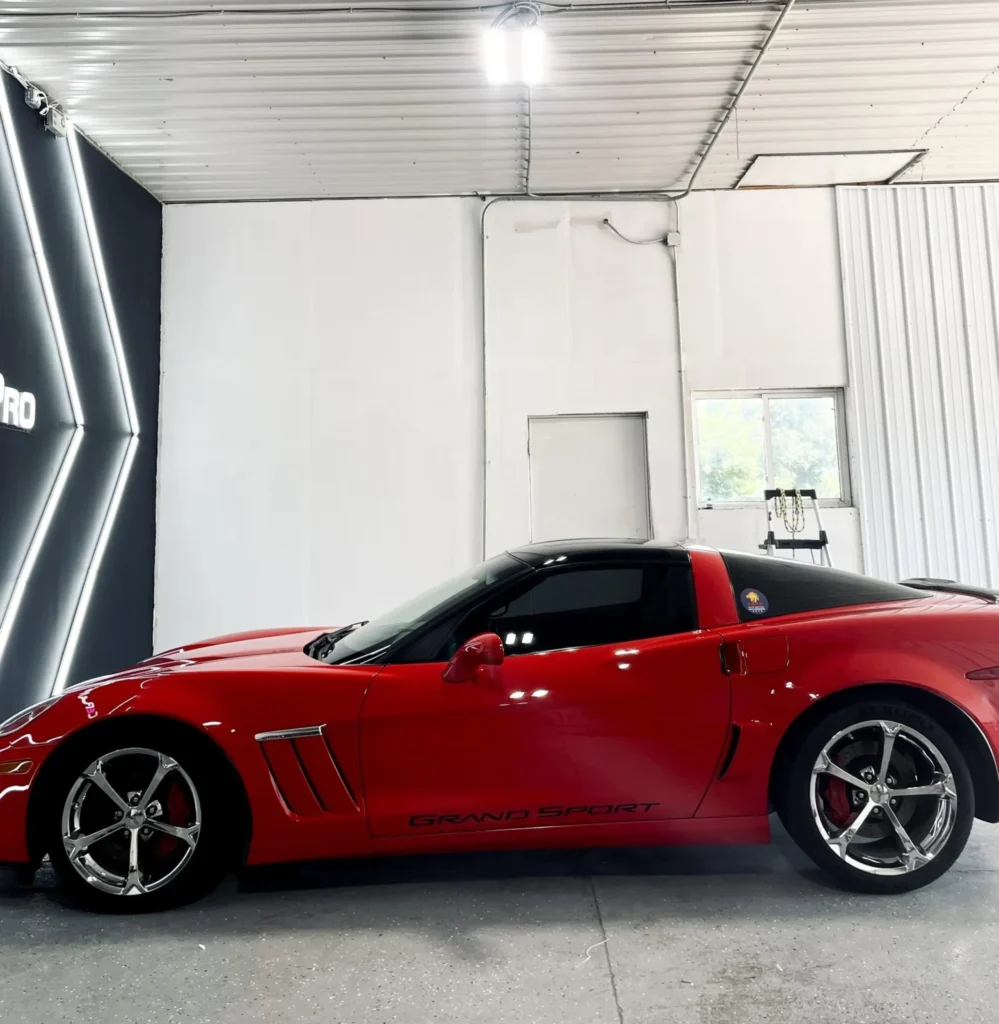
Red Chevrolet Corvette Grand Sport inside the Tint & Gloss studio in OmahaPaint Enhancement

Light Correction

Light correction, often a single polishing step, softens fine swirls and brings back depth and clarity without removing more clear coat than the defects require. It is the usual starting point when the finish is dull but not deeply marked.

  • Fine swirl marks
  • Marring: light abrasion marks left by rubbing the paint
  • Water spots sitting on the surface
  • Light oxidation: the dull, chalky look of aged paint
  • A fine pad and polish rather than a heavy cut
  • Works across a full exterior or a single panel

Best for: Newer or well-kept cars with fine swirls, mild haze or water spotting.
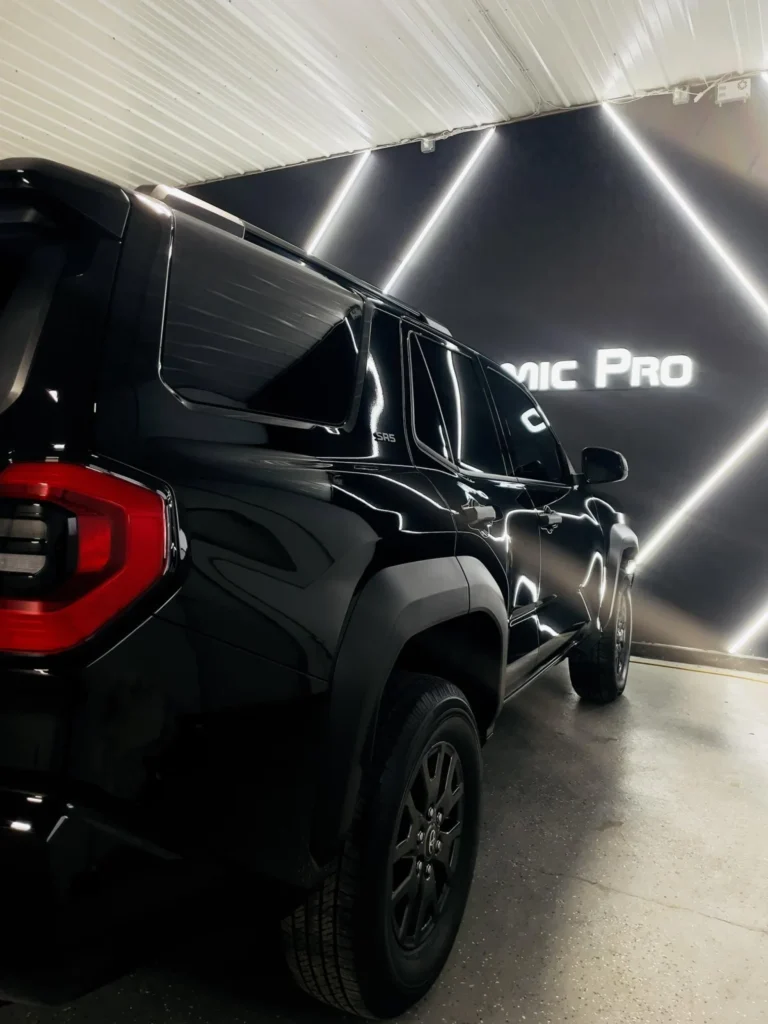
Glossy black pickup truck under the studio lights at Tint & GlossTwo-Step and Beyond

Multi-Step Correction

Multi-step correction cuts with a compound first, then refines with a polish to restore gloss. It suits paint where a single pass would leave defects behind.

  • Moderate swirls and scratches that need more cut
  • Holograms: rainbow-like buffer trails left by earlier polishing
  • Etching: marks eaten into the clear coat by mineral deposits or acidic residue
  • Heavier oxidation and deeper dullness
  • Compounding first, then a finer polish
  • More machine time than light correction

Best for: Daily-driven or older cars with visible swirls, buffer trails or etching across several panels.

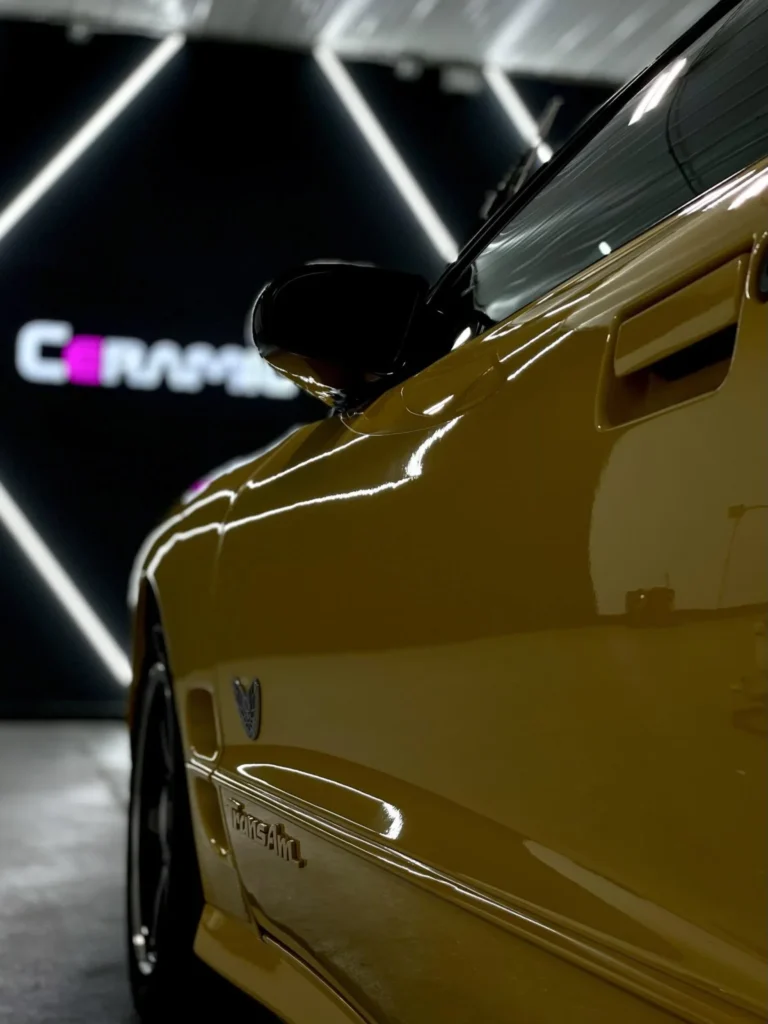
Reflective yellow paint on a car beside the Ceramic Pro sign in the Omaha studioPaint Restoration

Heavy Defect Assessment

Deep scratches and heavy oxidation are assessed panel by panel. Some defects improve a lot and some only partly.

  • Deep scratches judged against the remaining paint depth
  • Heavy oxidation that has dulled large areas
  • Wet sanding: leveling with fine-grit abrasive paper, considered only where paint depth allows
  • Often combined with multi-step polishing

Best for: Heavily marked paint where the owner wants the biggest possible improvement and accepts its limits.

How a Paint Correction Job Typically Runs, Step by Step

These steps describe how a paint correction typically runs in the trade, so you know what to expect from any shop.

  1. Share Your Details and Get a Recommendation

    After you send your details, the detailer typically reviews them and recommends a correction level and a price for your car. Any questions about the marks you see can be raised in that first conversation.

  2. Wash and Decontaminate Before Any Polishing

    The car is washed, then decontaminated: bonded dirt is lifted with an iron remover (dissolves metal particles), a tar remover and a clay bar (a resin bar that pulls grit from the surface). Polishing over leftover grit would drag it across the paint.

  3. Inspect, Measure and Run a Test Spot

    The paint is inspected and its thickness read at several points with a gauge, a meter that reports paint depth in mils (thousandths of an inch) or microns. A test spot, a small trial area, tries the finest pad and compound that works first.

  4. Cut Away Defects, Then Refine the Finish

    Working panel by panel, the detailer makes the polishing passes the chosen level calls for. Pads and pressure are adjusted as the paint responds, and heavier defects may call for repeat passes.

  5. Wipe Down and Check Under Inspection Lights

    Polishing oils can hide leftover marks, so each panel is wiped with IPA, an isopropyl alcohol solution, to strip them away. The detailer then checks the paint under inspection lights, which help confirm the defects are gone rather than hidden.

  6. Walk Around the Finished Paint

    At handover, the finished paint is reviewed with you panel by panel in good light, and any questions about the result can be raised before you drive away.

Why Choose Tint & Gloss for Paint Correction in Omaha, NE

10 Years in the Industry

Tint & Gloss has spent 10 years in the automotive industry. That experience covers our time in the trade overall, not paint correction alone. Whether your vehicle needs light polishing or more involved correction, we can discuss the options that suit its paint condition.

Customer Service and Quality Work

Customer service and quality work are standards we value at Tint & Gloss. We provide clear answers about the correction process, explain what polishing can improve, and help you understand the work involved before making a decision.

Recommendations Based on Paint Condition

Not every vehicle needs the same level of correction. We consider the visible imperfections, affected panels, and finish you want before discussing suitable options. This helps keep the recommended work focused on your vehicle’s actual needs.

Clear Quotes and Expectations

We want you to understand what is included before approving a paint correction service. From the selected panels to the expected results, we discuss the details and provide a quote based on your vehicle and the work requested.

Paint Correction at Our S 168th Street Shop in Omaha

Tint & Gloss is based at 7702 S 168th Street in Omaha. Drivers looking for paint correction near 168th Street, or in any of the towns below, can bring their car to this shop.

We serve customers from Omaha, Elkhorn, Gretna, Millard, Bellevue, Blair and La Vista in Nebraska, plus Council Bluffs, Iowa.

Monday to Friday 9 AM to 5 PM; Saturday 9 AM to 2 PM; Sunday closed

Get Smoother, Clearer Paint on Your Omaha Car

Paint that reflects cleanly makes a car look cared for again. Choose the coverage that fits and the correction level you prefer, then request your price online, or phone the shop directly to go over the details.

Omaha Weather and Daily Driving: What to Weigh Before Paint Correction

Summer Heat and Washing Marks

July in Omaha averages a high of 88°F, according to climate-zone.com. Washing or drying a car while its panels are warm can leave water spots and residue behind.

Daily Driving and Fine Marks

In 2024, 71.8% of Omaha workers drove alone to work, with an average commute of 19.6 minutes and about 2 vehicles per household, per Data USA’s American Community Survey figures. Cars that are driven daily may collect fine marks over time.

Freezing Nights and Winter Washing

Omaha has about 131 nights a year at or below 32°F, and January’s average low is 15°F, according to climate-zone.com. Freezing weather can make thorough washing and drying harder, so some cars go longer between washes in winter.

About Omaha, Nebraska

Omaha is the largest city in Nebraska, with 486,051 residents in the 2020 census and a metro area of about 1.01 million people, according to Wikipedia. The city is commonly described in six areas: Downtown, Midtown, North, South, West and East Omaha.

Neighborhoods such as Old Market, Dundee, Benson and Gifford Park are part of the city, while I-80, I-480 and I-680 connect it to the rest of the metro.

Drivers across these neighborhoods can contact us at Tint & Gloss to find out what their paint needs and what correcting it involves.

Put a Price on Paint That Looks Right Again

Not sure which correction level your paint needs? Send the form and we will guide you to the right one.

Monday to Friday 9 AM to 5 PM; Saturday 9 AM to 2 PM; Sunday closed

Paint Correction Questions From Omaha Drivers

Paint correction cost in Omaha, NE typically depends on five things: vehicle size, defect depth, the areas covered, the correction level and the paint’s history, such as earlier polishing or repainting. Call (402) 851-0525 to get a price for your car.

Paint correction is machine polishing aimed at removing defects, and buffing is often the casual name for it. Dual-action (DA) polishers oscillate gently, rotary polishers spin and cut faster. Wax and fillers only hide scratches, while polishing can level light ones.

Paint correction is generally safe when it removes only what the defects require, because the clear coat is finite. Each correction takes a little of it, and earlier polishing reduces what remains, so repeat corrections are limited by the paint’s remaining thickness.

Results last as long as your washing habits allow. Washing with a dirty mitt or without a grit guard (a dirt-trapping insert) can bring swirls back. One guide, from Gilroy Blackout, says re-correction can be needed every 3 to 5 years.

Often not fully. A scratch your fingernail catches in has likely gone through the clear coat, so touch-up or repaint may be needed. These are RIDS, random isolated deep scratches. Cracked or peeling clear coat needs a respray; contact us for an assessment.

It varies from car to car and with the work chosen, so no honest figure fits every vehicle. Ask for the expected time when you request your quote, so you know how long to plan without the car.

Request a quote

Call Get a Free Estimate
Back to top